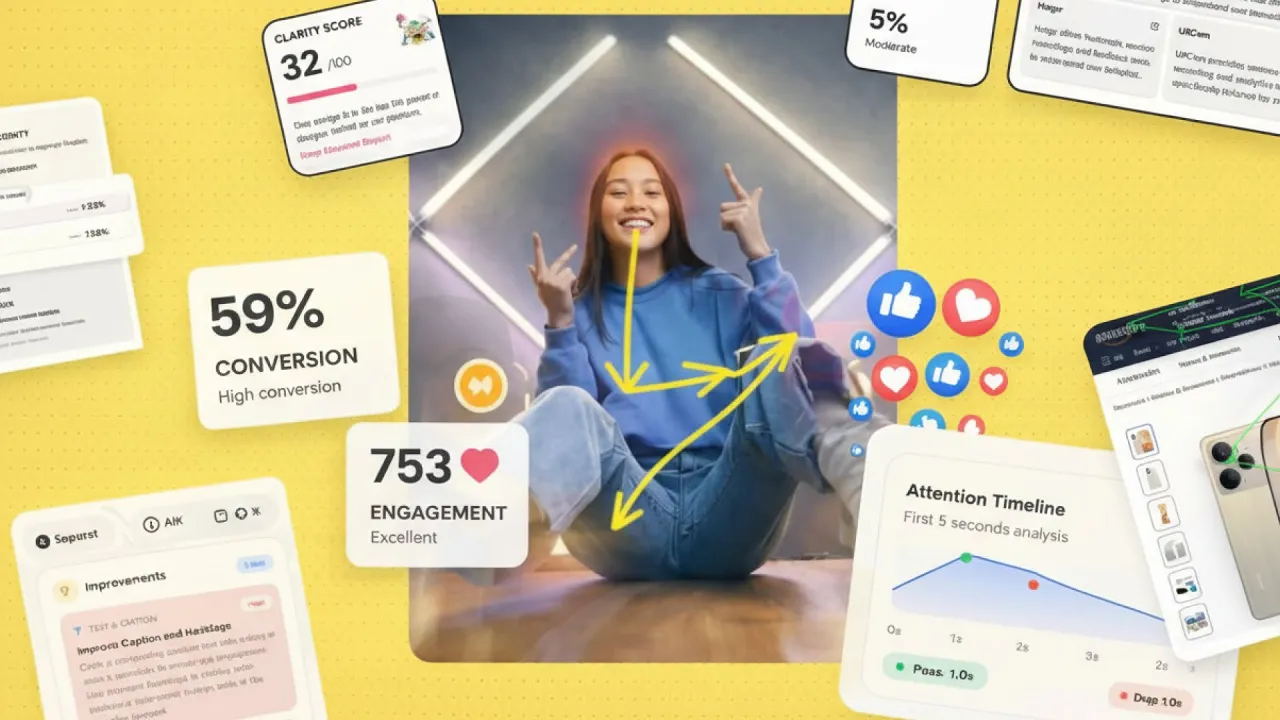
Pre-Launch Design Intelligence
Founder • ClarityUX
Designing and building an AI-powered UX intelligence tool, from concept to working product. Currently at 5,000+ active user base across Web, Figma and Chrome.
Learn more about corporate cards

The Shift from Designing Interfaces to Designing Intelligence
As AI tools became more capable, I began exploring a simple question:
What if UX evaluation could be partially automated?
Design teams spend significant time reviewing interfaces, documenting usability issues, and translating heuristics into actionable insights. Despite decades of UX research, applying these guidelines consistently remains manual and slow.
To explore a scalable solution, I built ClarityUX — an AI-powered platform that analyzes product interfaces and ad creatives before launch to surface usability and engagement risks.
UX Research and Testing Doesn’t Scale
UX quality often depends on the experience of the reviewer. While frameworks like Nielsen’s heuristics and accessibility guidelines exist, applying them consistently across teams is difficult.
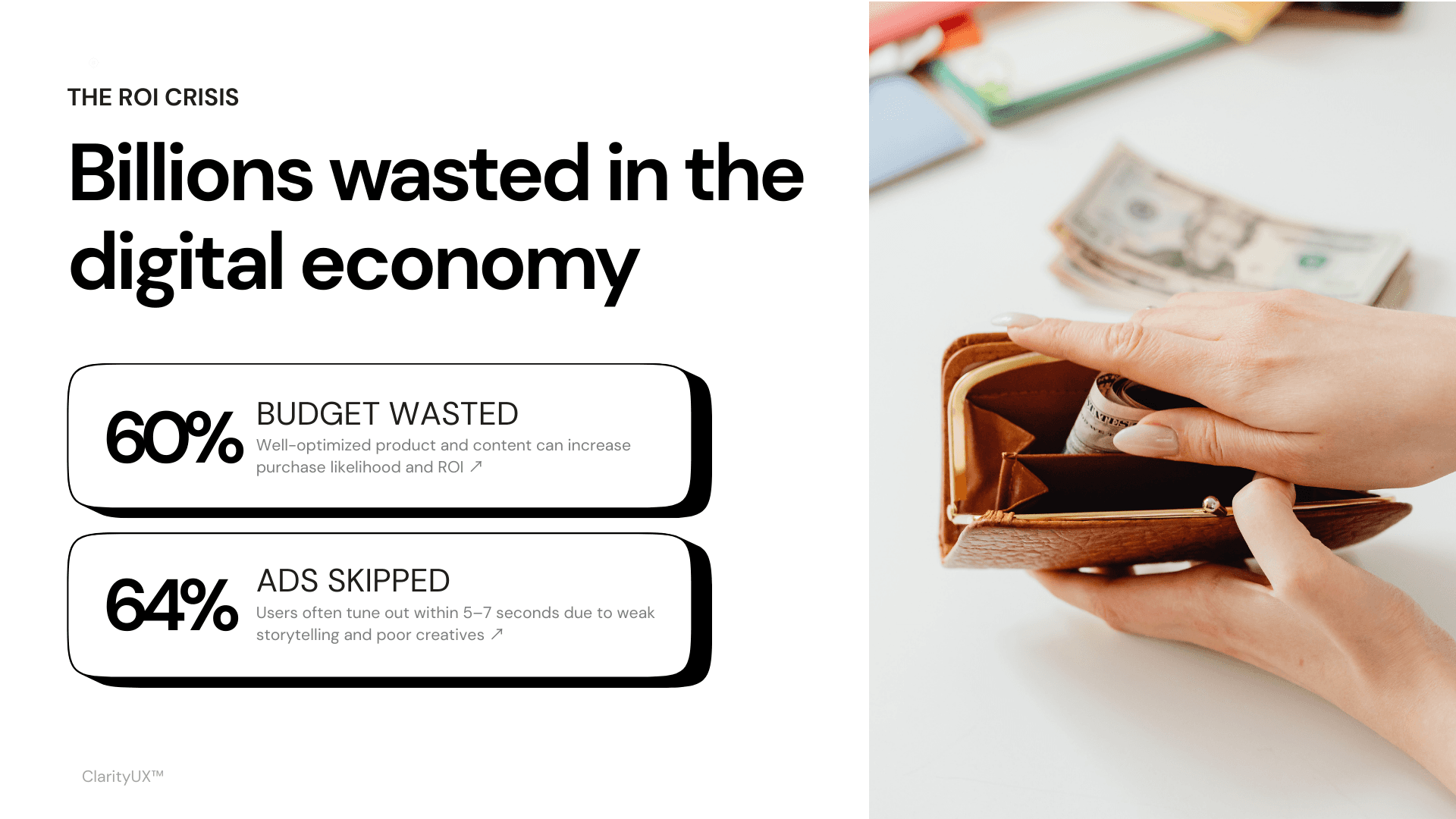
Design reviews are often constrained by limited time, budgets, and access to UX research and expertise. As a result, teams rely on manual audits, fragmented knowledge sources, and late-stage testing to identify usability issues.
For many organizations, especially in digital advertising and product design where creative performance directly affects spend and this leads to inefficient evaluation at scale.
The Opportunity
ClarityUX was designed for a rapidly growing ecosystem. Creator economy market size is currently at $250B+ as per Contrary Research's latest case-study on Canva.
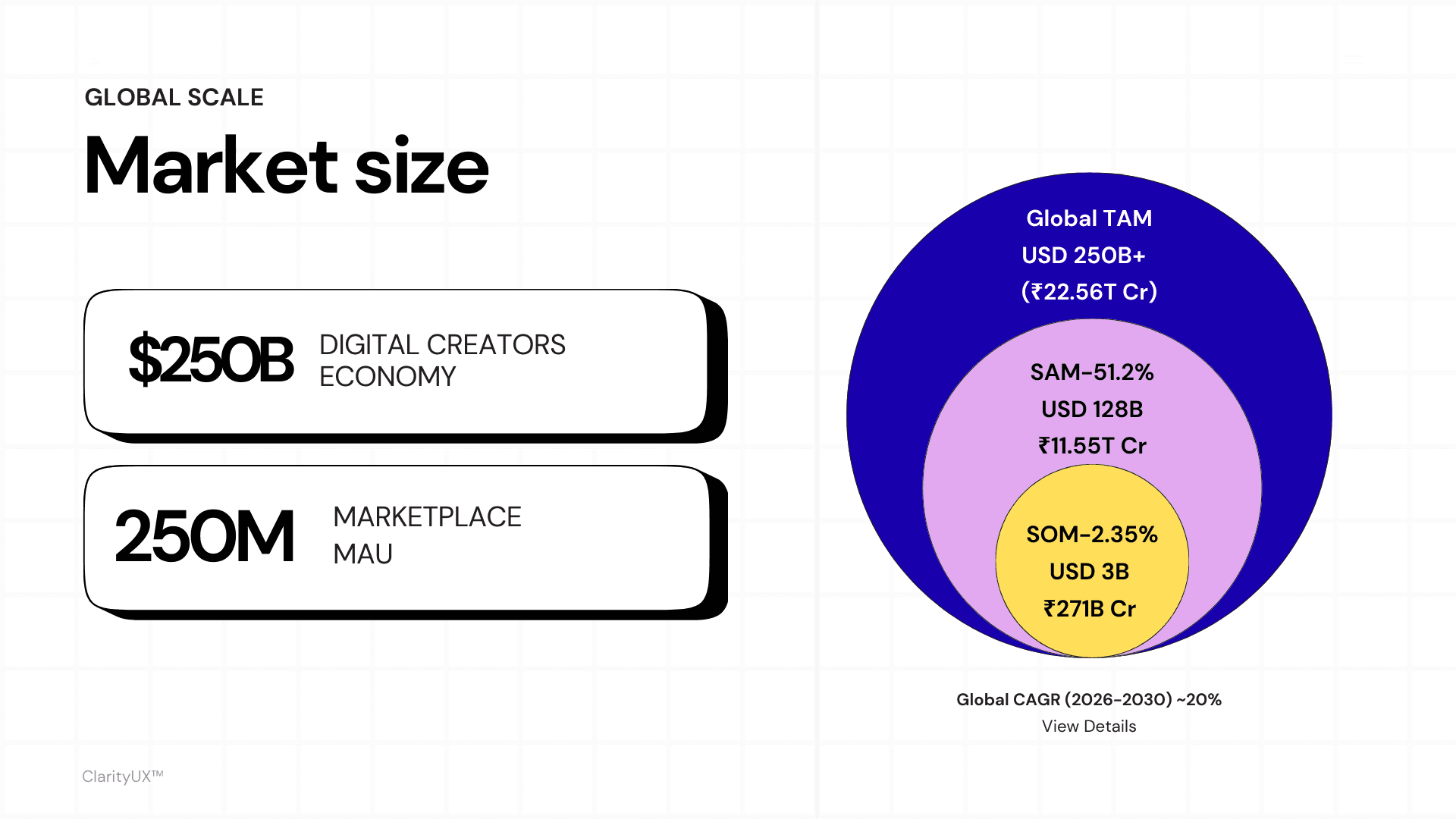
Brands, creators, and marketers all face the same problem: Predicting creative performance before launch. ClarityUX explores how AI can act as a design intelligence engine, analyzing interfaces and creatives before money is spent on distribution.
From Prompt to UX Intelligence
ClarityUX was designed as a multi-layer AI system that analyzes interfaces and generates structured UX insights. Interfaces are captured through a Chrome extension, Figma plugin, or web app uploads, then evaluated using a RAG model trained on UX heuristics and accessibility guidelines.
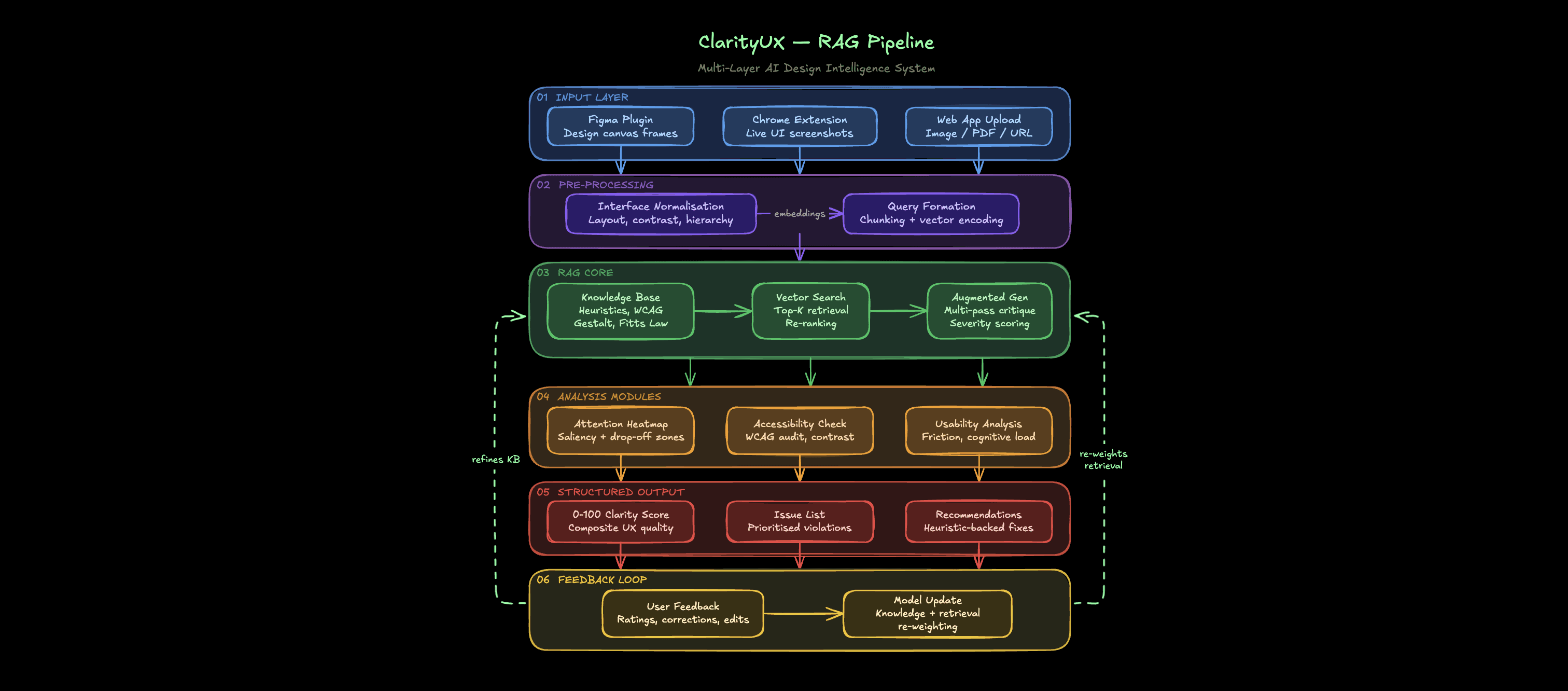
Developed using Excalidraw and Claude Connectors. View our RAG pipeline
The system identifies usability issues, analyzes attention drop points, and produces structured outputs like clarity scores, issue lists, and improvement recommendations—functioning more like a design critique engine than a chatbot.
Building Across Surfaces
To integrate into real design workflows, ClarityUX was built across three environments.
Web Application
The central platform for analyzing interfaces and ad creatives. Users upload screenshots/videos and receive structured growth and UX insights.
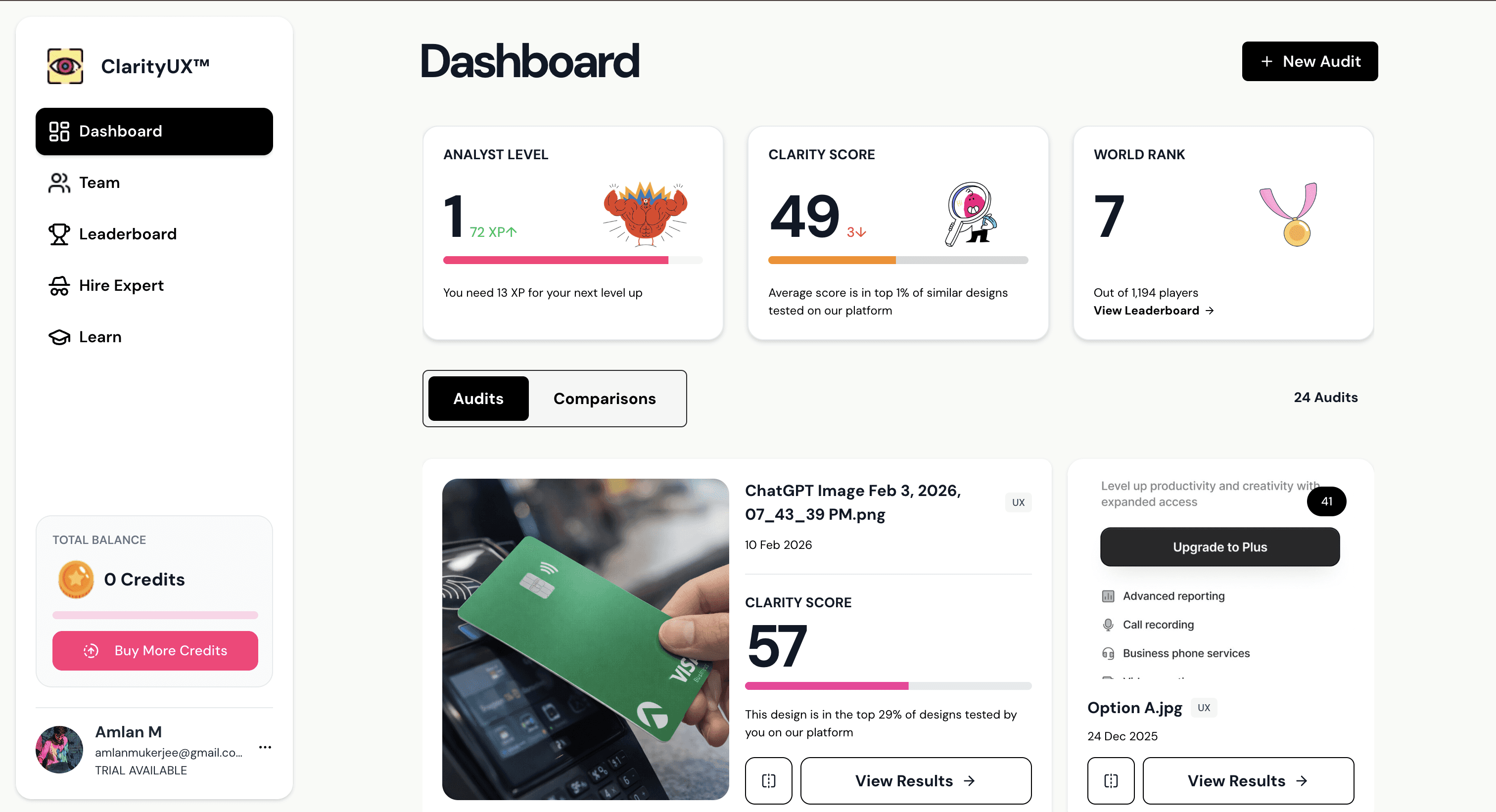
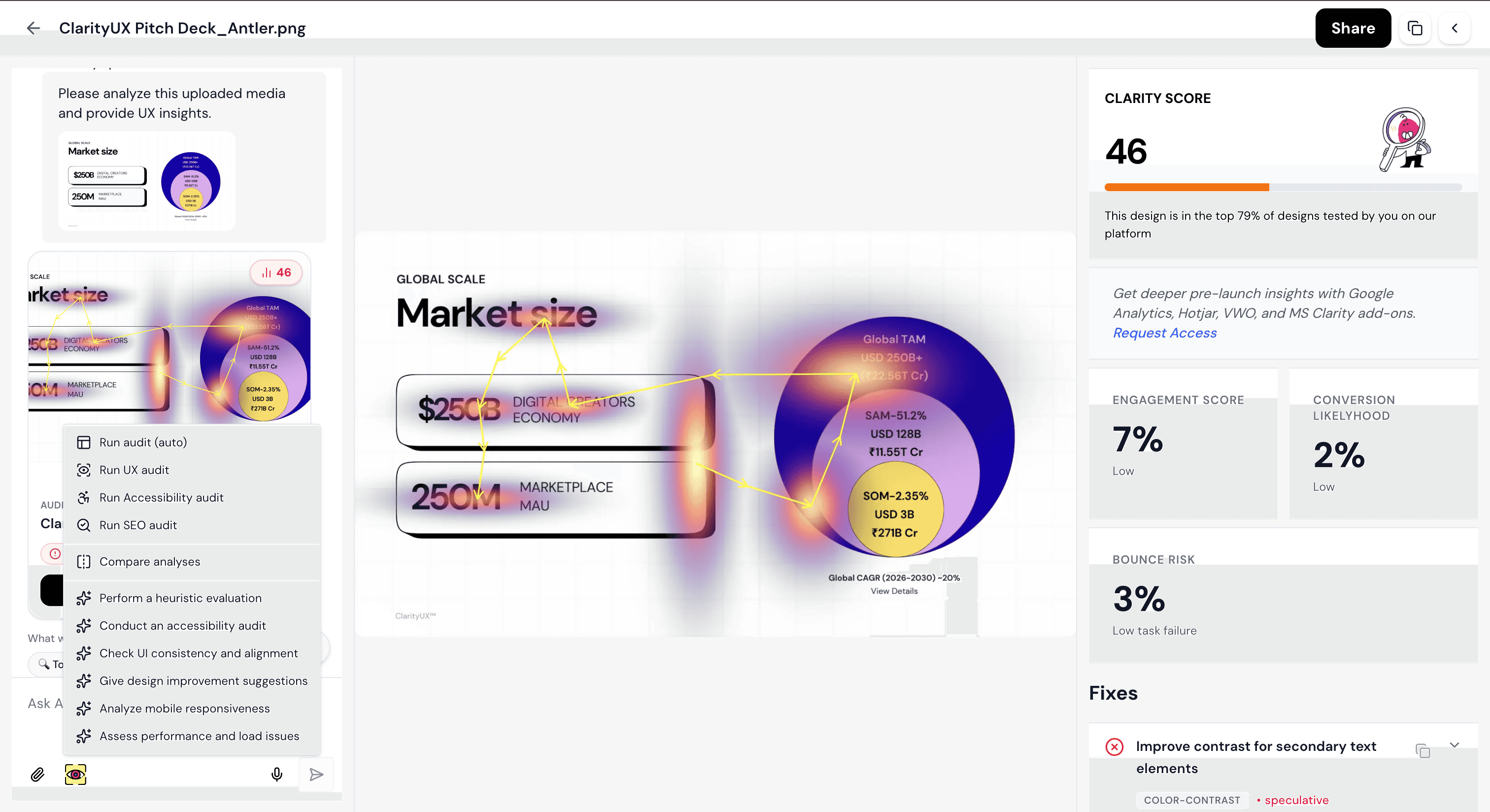
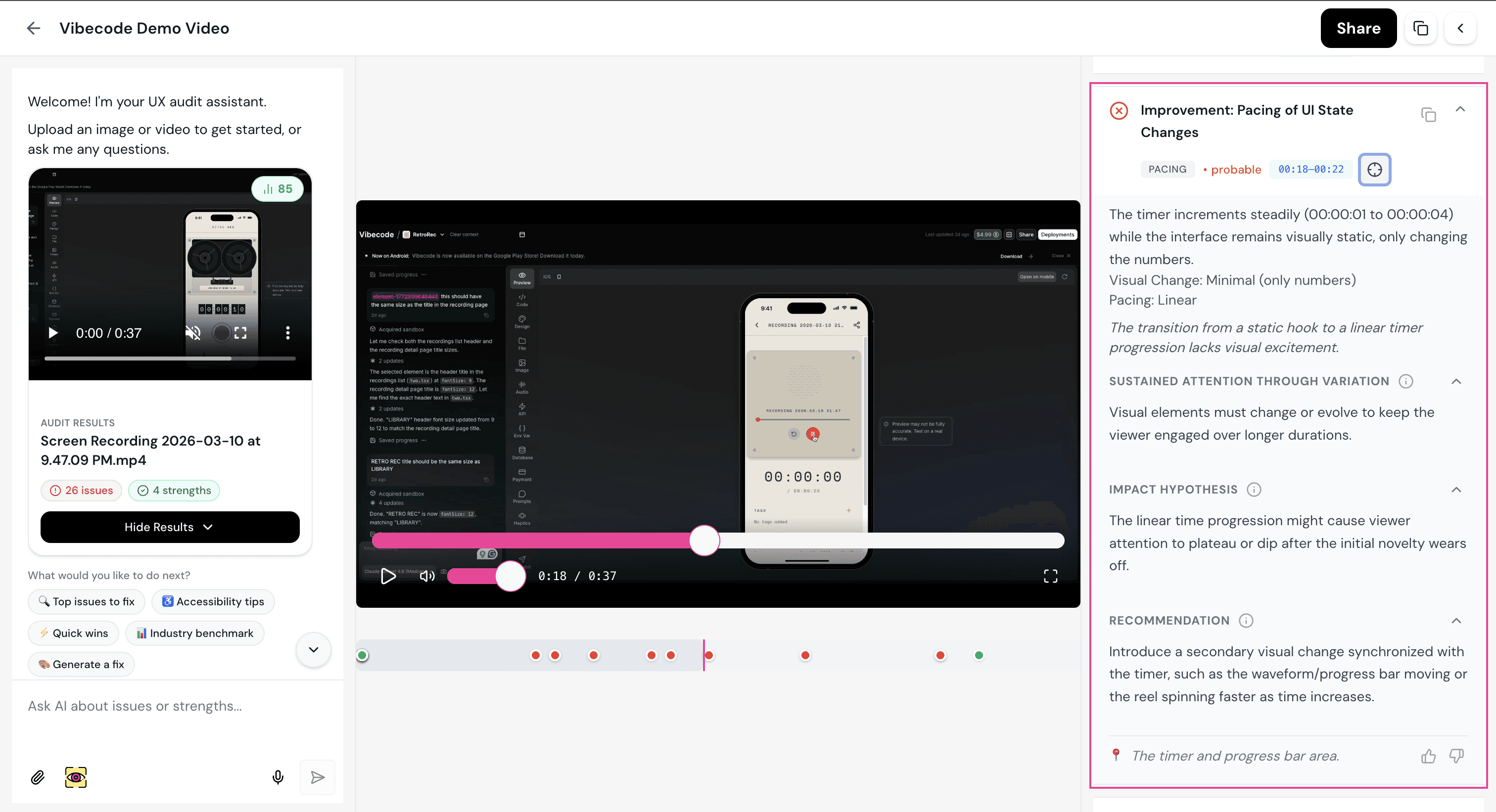
Dashboard view, clarity score output and attention timeline
Chrome Extension
Enables live UX audits of production websites. Designers can capture a page and instantly generate usability feedback.
Chrome browser capture UI and insights panel
Figma Plugin
Brings design intelligence directly into the design workflow. Designers can analyze frames without leaving Figma.
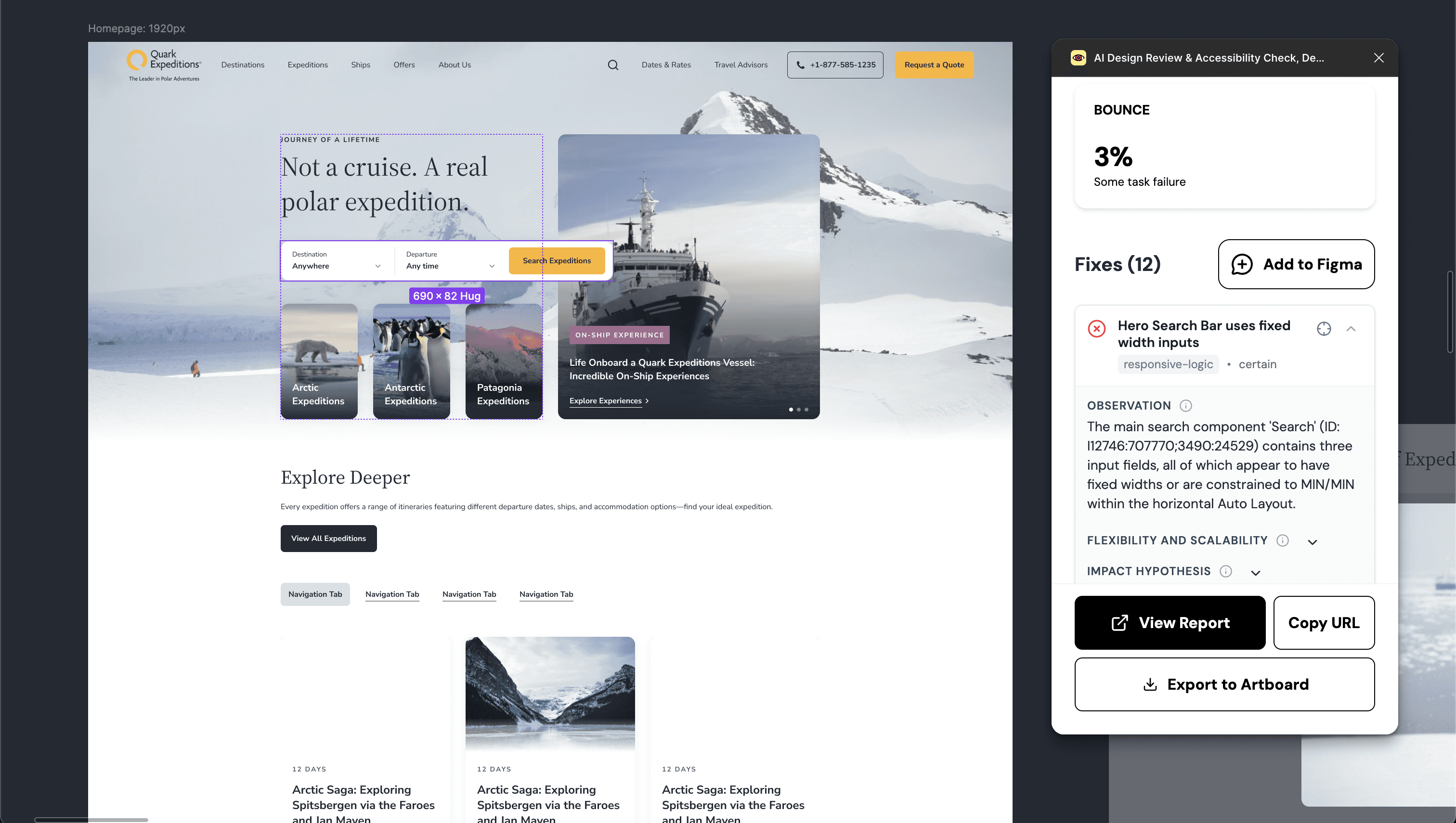
Plugin UI and insights inside Figma
What This Project Represents
ClarityUX began as an experiment but evolved into a deeper exploration of how AI is changing the practice of design.
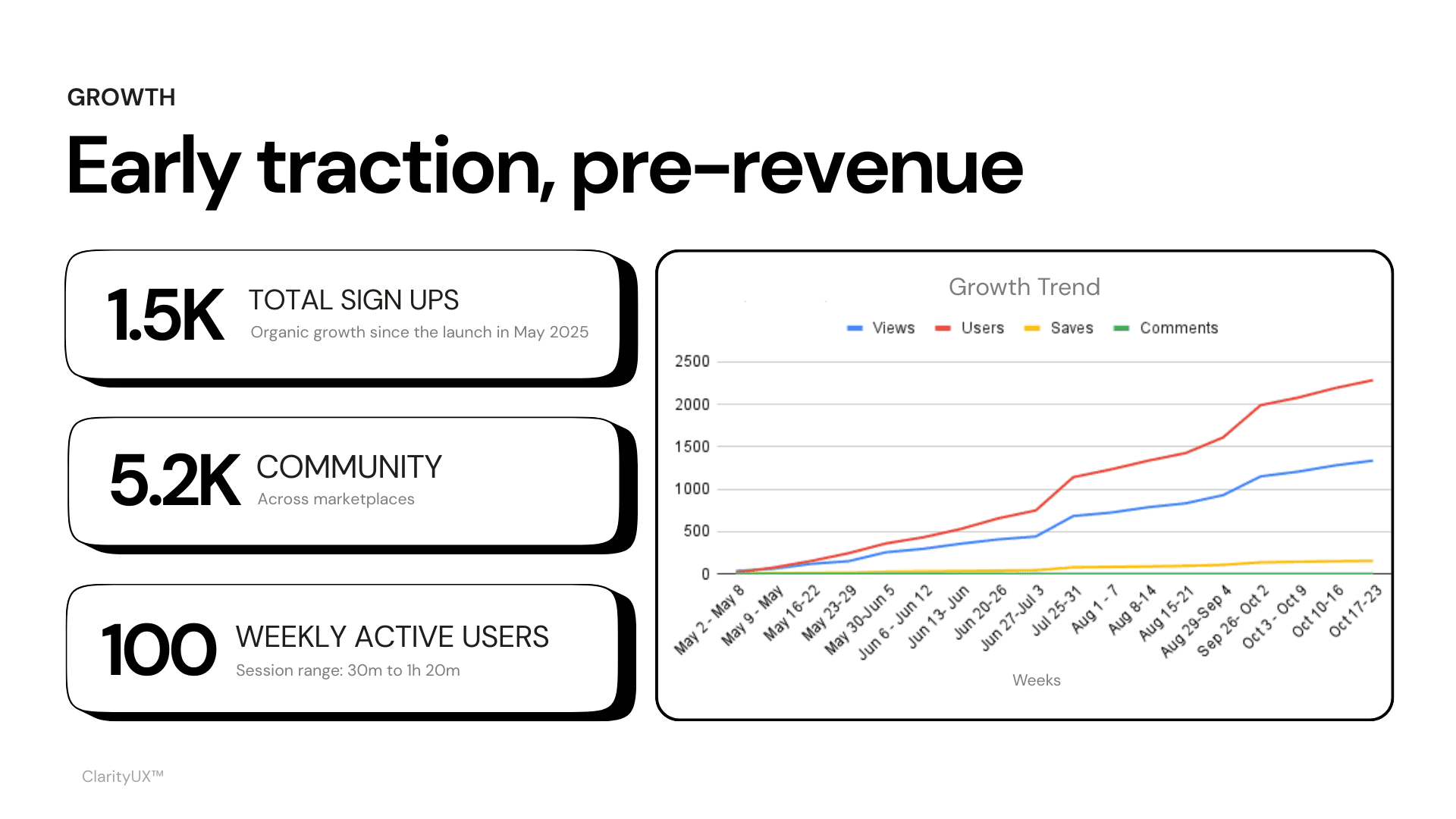
It demonstrated how individual designers can now build intelligent systems, not just interfaces, using AI orchestration and vibe coding. The real challenge shifts from designing screens to designing prompts, knowledge layers, and reasoning systems that generate meaningful insights.
Ultimately, the goal of ClarityUX is to scale UX expertise—helping teams identify usability issues and improve product and ad experiences before launch.
For me, this project marks a shift. From designing products to designing intelligence that improves them.